
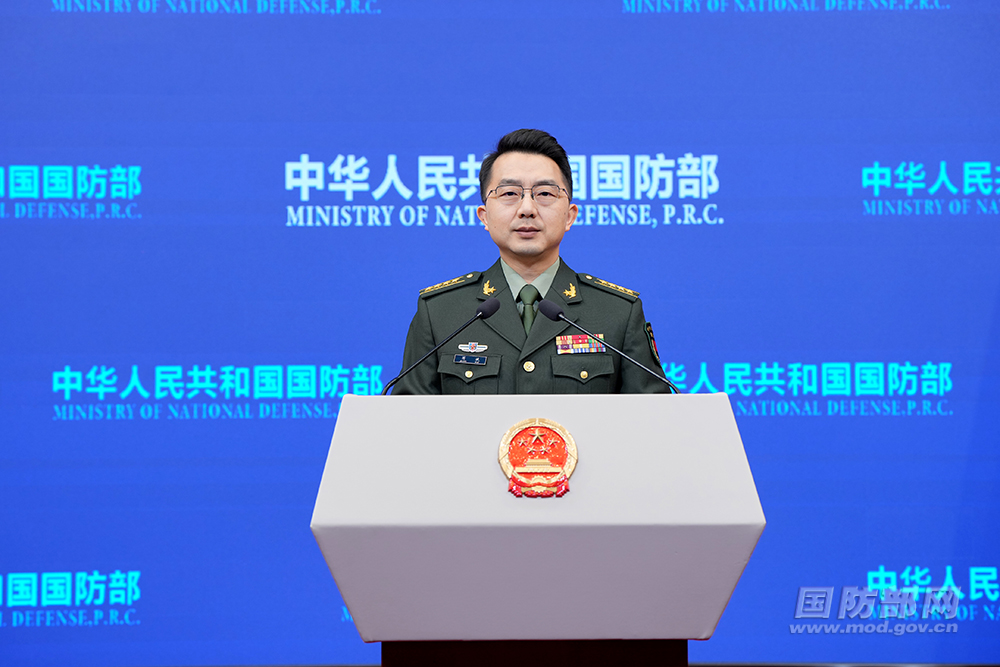
Senior Colonel Jiang Bin, Deputy Director General of the Information Office of the Ministry of National Defense (MND) and Spokesperson for the MND, answered questions at a regular press conference on the afternoon of March 26, 2026. (mod.gov.cn)
(The following English text is for reference. In case of any divergence of interpretation, the Chinese text shall prevail.)
Jiang Bin: Friends from the media, good afternoon. Welcome to this month's regular press conference of the Ministry of National Defense.
Journalist: China and Viet Nam held the first ministerial meeting of the "3+3" Strategic Dialogue on Diplomacy, Defense and Public Security this month, and the two defense ministers jointly hosted the Border Defense Friendship Exchange. What's your comment on the strategic significance of the China-Viet Nam "3+3" mechanism? Could you please brief us more on the specific arrangements of China-Vietnam military-to-military exchanges and cooperation in 2026?
Jiang Bin: China and Viet Nam convened the first ministerial meeting of the "3+3" Strategic Dialogue on Diplomacy, Defense and Public Security in mid-March. Following the dialogue, the Chinese and Vietnamese militaries held the 10th Border Defense Friendship Exchange. Minister of National Defense Dong Jun attended both events. The "3+3" Strategic Dialogue mechanism stands as a groundbreaking and vital strategic communication platform, jointly pioneered by China and Viet Nam in the global arena. The Border Defense Friendship Exchange is also an important signature program for exchanges and cooperation co-initiated by the two sides. The two mechanisms epitomize the closeness and uniqueness of the relations between the two countries and militaries.
With strong bonds between the two countries, China and Viet Nam are each other's comrades and brothers. As friendly socialist neighbors, China and Viet Nam are in a community with a shared future of strategic significance. Exchanges and cooperation between the two militaries have deepened and expanded in recent years, with new progress and achievements in such areas as high-level engagement, joint exercises and training, and border defense cooperation. Facing a volatile and turbulent international landscape compounded with increasingly complex and grave external security challenges, the Chinese and Vietnamese militaries will follow the strategic guidance of the top leaders of the two Parties and countries, enhance strategic communication, bolster military mutual trust, and strengthen substantive cooperation in such areas as strengthening political loyalty of the armed forces, maritime security and multilateral coordination. We will work together to safeguard the security and development interests of the two nations, and bring stability and positive energy to regional peace and prosperity.
Journalist: I have two questions. Firstly, according to reports, the U.S. Office of the Director of National Intelligence recently released 2026 Annual Threat Assessment of the U.S. Intelligence Community. It's assessed in the document that the Chinese mainland does not plan to attack Taiwan in 2027, and prefers to achieve unification without the use of force. In recent years, the U.S. side has been keen on peddling speculative timelines for a so-called Chinese mainland's attack on Taiwan, such as 2022, 2023, 2025, and 2027, many of which have turned out to be utterly wrong. Some people pointed out that the U.S. side's enthusiasm for such propaganda is clearly driven by political motives. What’s your comment on this?
Secondly, we noticed that in response to the U.S. intelligence community's assessment that the Chinese mainland does not plan to attack Taiwan in 2027, the head of Taiwan's Mainland Affairs Council said that the Chinese mainland has never ceased military preparations against Taiwan. Do you have any comment?
Jiang Bin: On your first question, the Taiwan question is purely an internal affair of China. How to resolve it is a matter for the Chinese, which brooks no foreign interference. We urge the U.S. side to abide by the one-China principle and stipulations of the three China-U.S. joint communiqués, be prudent on its words and actions concerning the Taiwan question, stop sending wrong signals to separatists seeking "Taiwan independence", and take concrete actions to maintain the overall stability of China-U.S. state-to-state and military-to-military relations.
On your second question, Taiwan is part of China. China will and must achieve reunification. It is an unstoppable historical trend that no one and no force can hold back. We will strive for the prospect of peaceful reunification with the greatest sincerity and utmost effort, but we make no promise to renounce the use of force. Should separatist forces seeking “Taiwan independence” dare to cross the red lines, they will only face a thunderous crackdown.
Journalist: It's reported that the UN Secretary-General appointed Major General Wu Junhui of China as the Force Commander of the UN Mission in South Sudan. It's believed that this is a high recognition of China's active participation in the UN Peacekeeping Operations (UNPKOs). Do you have any comment on this?
Jiang Bin: Since our first participation in UNPKOs in 1990, the Chinese military has conducted 26 peacekeeping missions, and sent over 50,000 peacekeepers to more than 20 countries and regions. 17 Chinese service members made the ultimate sacrifice for the cause of peace. As we speak, more than 1,600 Chinese peacekeepers are performing duties including situation stabilization, demining and explosive ordnance disposal, protection of civilians and medical rescue, in countries and regions including Lebanon, South Sudan, Abyei and the Democratic Republic of the Congo. Chinese peacekeepers are professional, efficient, well-trained and disciplined. An increasing number of peacekeeping professionals from the Chinese military have been entrusted by the UN with critical roles. They are widely acclaimed by UN officials, mission commanders, foreign counterparts, as well as the governments and peoples of host countries.
China embarks on missions for peace and undertakes responsibilities for the world. China is the largest troop-contributing country among the permanent members of the UN Security Council and the second-largest contributor to peacekeeping assessment. We remain unwavering in our support for the core position of the UN and its critical role in international peace and security affairs. We will continue to increase investment in UNPKOs and deepen peacekeeping cooperation with other nations to dispel the shadow of war and embrace the sunshine of peace for a brighter world.
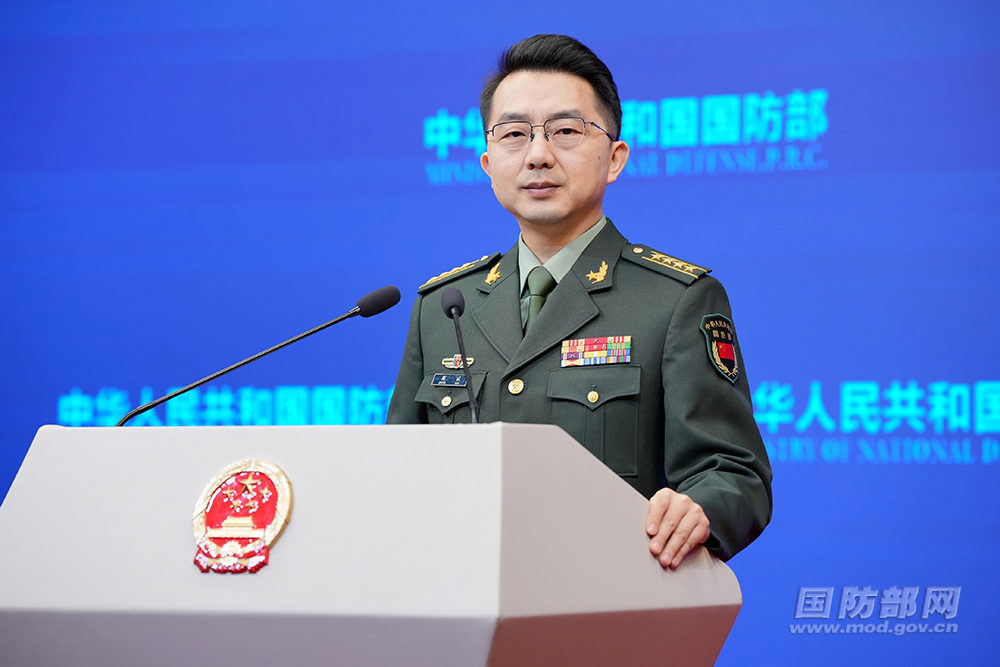
Senior Colonel Jiang Bin, Deputy Director General of the Information Office of the Ministry of National Defense (MND) and Spokesperson for the MND, answered questions at a regular press conference on the afternoon of March 26, 2026. (mod.gov.cn)
Journalist: Japan's Prime Minister reportedly said that with rising military capabilities of China and the DPRK, as well as their closer cooperation with Russia, Japan faces its most severe and complex security environment since WWII. She noted the necessity of preparing for "new fighting styles" involving the extensive adoption of UAVs, and for prolonged conflicts. Do you have any comment on this?
Jiang Bin: We are all aware of the undeniable fact that Japan invaded all of its neighboring countries. As a nation that once inflicted profound suffering upon the people of Asia and the world, and that has yet to genuinely reflect on its historical crimes of aggression, Japan is now keeping exaggerating the so-called external threats—a completely unfounded narrative driven by ulterior motives. It's more than obvious that the true intention of the Japanese administration is to divert public attention from domestic problems, mislead the international community, and pursue "remilitarization". The Japanese side has pushed forward the revision of the three national security documents, vigorously developed offensive military capabilities, and even clamored for the possession of nuclear weapons. Such dangerous moves are very alarming. China upholds the principle of looking towards the future while learning from history. The crux of the issue is to heed historical warnings so that past tragedies never be repeated. Peace-loving people around the world should unite to resolutely curb the resurgence and spread of "neo-militarism" in Japan, and to firmly uphold regional peace and stability as well as the safety and well-being of the people.
Journalist: Some individuals from the Philippine Coast Guard reportedly said that relevant waters in the South China Sea is part of Philippine territory based on international law and the "2016 South China Sea Arbitral Award", and any claim that the waters are disputed is a challenge to the Philippines' sovereignty. Do you have any comment on this?
Jiang Bin: China has indisputable sovereignty over Nanhai Zhudao and its adjacent waters, and has sovereign rights and jurisdiction over relevant waters. The so-called South China Sea Arbitral Award is entirely illegal, null and void. China does not accept or recognize it, and will never accept any claim or action based on the award. China's territorial sovereignty and maritime rights and interests in the South China Sea are fully backed by historical and jurisprudential evidence, and are under no circumstances affected by the award.
Driven by self-interest, some forces of the Philippine side have gone to great lengths to stir up troubles at sea and fabricate false narratives. Their behaviors have disrupted bilateral relations and undermined regional peace and stability. The Chinese side is unwavering in our will to defend territorial sovereignty and maritime rights and interests. Should the Philippine side obstinately continue with its rights-violating acts, provocations and propaganda, it will only face more resolute countermeasures from the Chinese side.
Journalist: Recently, PLANS Dongguan and PLANS Anqing completed their first formation training and live-fire training after being commissioned to the PLA Eastern Theater Command Navy. It's believed by some experts that the two latest Type 055 guided-missile destroyers will significantly enhance the capabilities of the PLA Navy in deterring and countering forces pushing for "Taiwan independence". What's your comment on this?
Jiang Bin: To achieve complete reunification of China is inevitable. It is a righteous cause for the Chinese nation and is whole-heartedly supported by all Chinese people. The PLA will continue to strengthen military training and enhance combat readiness. We will take resolute measures against separatist forces seeking "Taiwan independence" and stand against external interference with stronger capabilities and through more diversified means. There is no escape should the "Taiwan independence" armed forces put up a stubborn resistance.
Journalist: I have two questions. Firstly, military conflicts in the Middle East have been escalating recently, with the US and Israel on one side and Iran on the other striking against each other's energy facilities. The passage through the Strait of Hormuz also faces serious threats. In this context, there are concerns about a potential nuclear disaster caused by the escalating conflict. Do you have any comment? Secondly, it is reported that the Japan Self-Defense Forces (JSDF) officer who broke into the Chinese embassy in Japan has recently been handed over to prosecutors. What's your comment on the malicious act?
Jiang Bin: On your first question, we call on relevant parties to immediately stop military operations, resolve differences and disagreements through equal-footed dialogue, prevent the conflict from spreading and spilling over, and avoid further escalation of the situation. The Chinese side will continue to make active efforts for the de-escalation of the situation and the restoration of peace.
On your second question, this incident is extremely egregious in its nature. It highlighted the grave reality that far-right ideology has grown rampant in Japan and that its infiltration into and influence on the JSDF is widespread and undeniable. The Japanese side must thoroughly investigate the incident at once, bring the full weight of law to bear on the perpetrator, and give a responsible account to the Chinese side. The international community needs to stay on high alert against Japan's accelerating rightward turn and the failure of internal control of its rapidly expanding SDF. We must recognize the serious consequences of the proliferation of neo-militarism in Japan and take measures to prevent neo-militarism from undermining peace and security in the region and beyond.
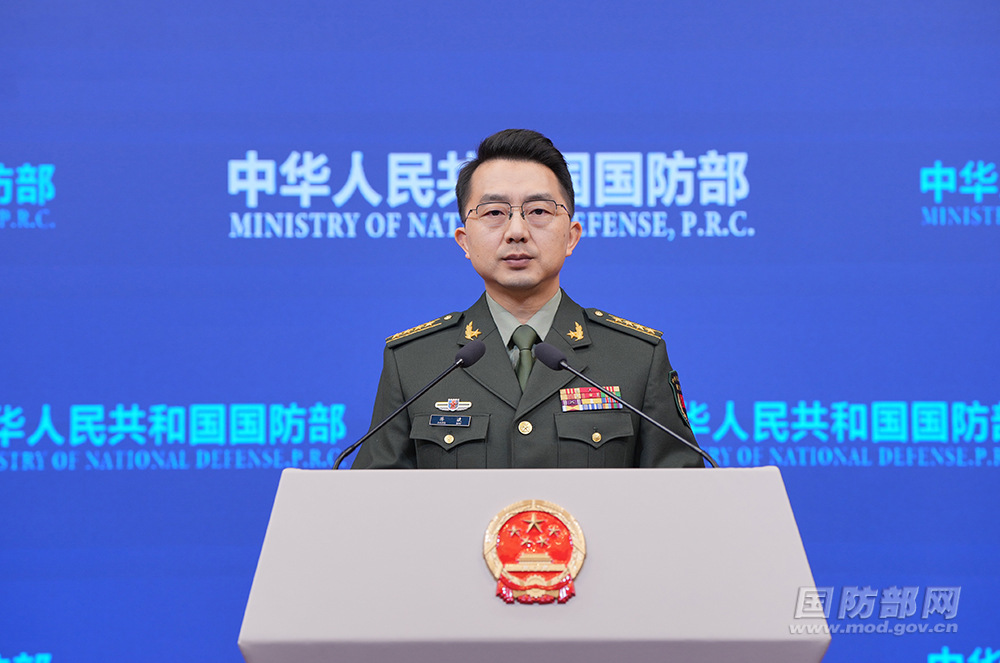
Senior Colonel Jiang Bin, Deputy Director General of the Information Office of the Ministry of National Defense (MND) and Spokesperson for the MND, answered questions at a regular press conference on the afternoon of March 26, 2026. (mod.gov.cn)
Journalist: In response to heightened tensions in the Middle East, the US side has called on China multiple times to send vessels for escort in the Strait of Hormuz. Has China received any invitations from the US side? What's your comment on the US approach of calling for action but not acting itself?
Jiang Bin: The recent tension in the Strait of Hormuz and waters nearby has disrupted the route for international goods and energy trade and undermined peace and stability in the region and beyond. The key to resolving the current crisis is for parties concerned to immediately stop the fighting and return to dialogue and negotiation at the earliest opportunity, so as to avoid further escalation of the situation.
Journalist: US Assistant Secretary of State claimed that China was suspected of conducting an underground nuclear test in 2020. The Deputy Secretary of the US Department of Energy said that China is conducting explosive nuclear tests and "is trying to cover them up".Do you have any comment?
Jiang Bin: Relevant remarks are false and misleading. It is well-known that China pursues a nuclear strategy of self-defense and follows a nuclear policy of no first use of nuclear weapons. We pledge not to use or threaten to use nuclear weapons against non-nuclear-weapon states or nuclear-weapon-free zones. We keep our nuclear capabilities at the minimum level required for national security, and do not engage in nuclear arms race with any other countries. China takes an active part in the review process of the Treaty on the Non-Proliferation of Nuclear Weapons and meetings of the P5 (five nuclear-weapon states) mechanism, and maintains dialogue with various parties on nuclear disarmament.
In pursuit of absolute superiority in security, the U.S. has disrupted international consensus on arms control and arbitrarily withdrawn from treaties and agreements. It has invested heavily in upgrading its nuclear triad capabilities, proposed the building of the "Golden Dome" global missile defense system, and deployed land-based intermediate-range missiles and other weapons and equipment to the Asia-Pacific region. The U.S. has allowed the New Strategic Arms Reduction Treaty to expire without renewal, sought to resume nuclear testing, and applied double standards on the issue of nuclear non-proliferation. Its behaviors have severely undermined global strategic balance and stability. As a nuclear superpower sitting on the world's largest nuclear arsenal, America's priority is to earnestly fulfill its special and primary responsibility for nuclear disarmament, make substantive and drastic cuts to its nuclear arsenal, and create conditions for other nuclear-weapon states to join in the nuclear disarmament process.
Journalist: Lai Ching-te recently said at an event that Japan's colonization of Taiwan was intended to promote the Greater East Asia Co-Prosperity Sphere. His remarks were criticized as "endorsing militarism in Japan", sparking strong backlash in Taiwan. Do you have any comment on this?
Jiang Bin: Lai Ching-te's remarks, characterized by the absence of conscience and moral baseline, are truly shocking. His obsequious flattery of Japan, who once colonized Taiwan, is despicable. As is widely known, Japanese militarists, under the guise of "co-prosperity", committed atrocities such as killing, pillaging and the enslavement of people. Lai Ching-te has ignored Japanese aggressors' heinous crimes of slaughtering hundreds of thousands of Taiwan compatriots, and betrayed history to whitewash Japanese colonialism. Such a disgrace to the Chinese nation like him will be nailed to the pillar of shame.
Journalist: Two Philippine Type C-208 aircraft illegally intruded into the airspace near China's Huangyan Dao in the South China Sea on March 18. Two days later, on March 20, another Philippine aircraft of the same type intruded into the airspace above Meiji Jiao of Nansha Qundao. Should such provocation intensify, how will the Chinese side respond?
Jiang Bin: The PLA Southern Theater Command has released a statement in response. We urge the Philippine side to refrain from challenging China's firm resolve in defending our sovereignty and legitimate rights and interests, stop stirring up troubles, and cease all dangerous and provocative acts. Otherwise, it will taste the bitter fruit of its own doing.
Journalist: Israeli Defense Minister said Prime Minister Benjamin Netanyahu and himself have authorized the Israel Defense Forces to eliminate any senior Iranian official as soon as the intelligence and operational conditions are met, without the need for additional approval. What's your comment on this?
Jiang Bin: Such statements and actions severely violate international law and go against human conscience and morality. The abuse of force, manifested in the killing of foreign leaders and the blatant attacks on civilian targets, cannot bring about security; instead, it only fuels a vicious cycle of deepening hatred and intensifying conflict in the region. We urge relevant parties to immediately stop military operations to prevent greater disaster in the Middle East and beyond.
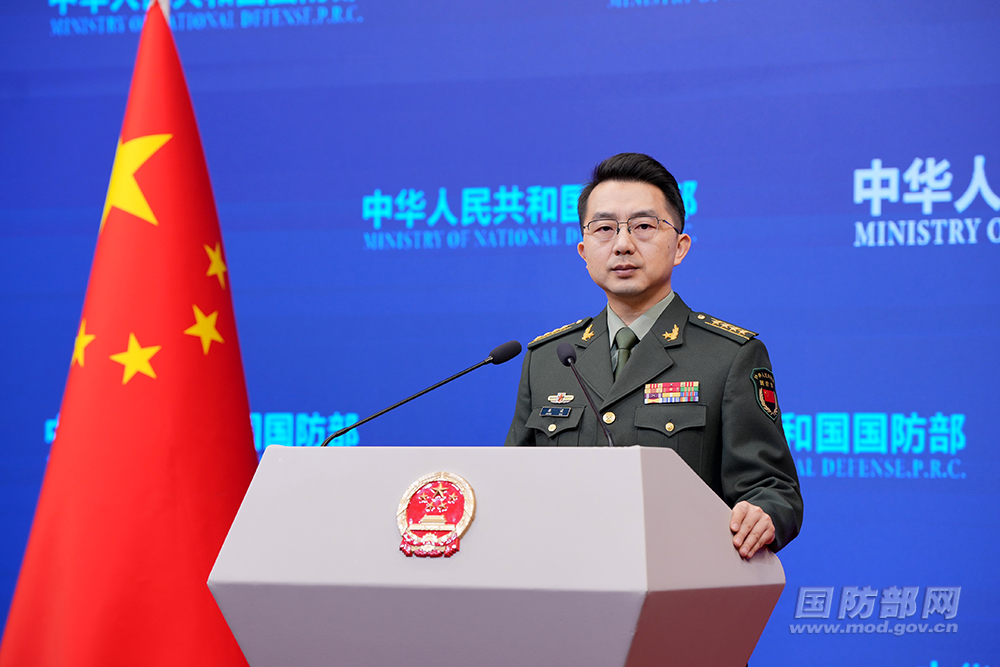
Senior Colonel Jiang Bin, Deputy Director General of the Information Office of the Ministry of National Defense (MND) and Spokesperson for the MND, answered questions at a regular press conference on the afternoon of March 26, 2026. (mod.gov.cn)
Journalist: I have two questions. Firstly, it is reported that the Japan Self-Defense Forces (JSDF) launched a major organizational overhaul on March 23. This includes a major reorganization of the Maritime Self-Defense Force, an expansion of its space force, and the establishment of an intelligence agency. The Japanese side also received the first batch of Tomahawk cruise missiles around mid-March. Analyses suggest that this will significantly enhance Japan's offensive capabilities. What's your take of Japan's recent military moves? Secondly, it is reported that the Philippine Marine Corps recently deployed an element of its newly-established BrahMos shore-based anti-ship missile unit to the northernmost tip of Luzon Island. Some analysts believe that this move is directly targeted at the key passageways of the Luzon Strait, which could potentially blockade the strategic routes for the PLA Navy to access the Pacific Ocean. This highlights Manila's upgraded deterrence against Beijing under the U.S.-Philippines alliance. What's your comment?
Jiang Bin: On your first question, with its ever-expanding military ambition, Japan continues to scale up the JSDF, strengthen its offensive and long-range strike capabilities, accelerate the militarization of space, and even pursue "preemptive strike" abilities. These actions have far exceeded the scope of the "exclusively defense-oriented policy", and pose a threat to regional peace and stability. The international community must resolutely contain the proliferation and spread of “neo-militarism” in Japan; otherwise, the consequences will be dire.
On your second question, we always oppose using the South China Sea issue as an excuse to enhance military alliances and conduct targeted military deployments. If the Philippine side attempts to obstruct legitimate operations of the Chinese military through such means, it is nothing but a wishful thinking based on an overestimation of its own capabilities.
Journalist: In a statement issued on March 20, the Philippine military claimed that a Chinese naval vessel, while patrolling near Xianbin Jiao in the South China Sea on March 7, directed its fire-control radar against a Philippine vessel. The Philippine side called the move "alarming and provocative". Do you have any comment?
Jiang Bin: As is widely known, some individuals in the Philippines always play the trick of a thief crying "stop thief". They often conduct rights-violation and provocative actions against China, and then fabricate stories to shift the blame onto the Chinese side, showing no credibility whatsoever. This time, they are once again playing up baseless allegations to smear China, in an attempt to mislead the public. Such act will never succeed. The international community has seen through the pathetic tricks of the Philippine side in manipulating perceptions. The Chinese side will not allow the Philippine side to continue its wanton acts, and will continue to take resolute measures in accordance with laws and regulations to firmly safeguard our territorial sovereignty and maritime rights and interests.
Journalist: Outcome documents of the recent US-Japan summit once again underlined that peace and stability across the Taiwan Strait is an indispensable element. However, according to reports, a major U.S. arms package for Taiwan, which includes advanced interceptor missiles, is ready for President Trump's approval and could be signed after his visit to China. Do you have any comment on this?
Jiang Bin: It's a consistent and clear position of China in opposing U.S. arms sales to China's Taiwan region. The U.S. side needs to recognize the high sensitivity and severe consequences of arms sales to Taiwan, earnestly abide by the one-China principle and stipulations of the three China-US joint communiqués, exercise utmost caution in handling the Taiwan question, and take concrete actions to build a stable China-U.S. relations and preserve cross-Strait peace and stability.
Journalist: The Philippines and the U.S. completed a bilateral maritime cooperative activity in Manila Bay and waters off Mariveles, Bataan on March 20. The participating forces carried out drills on communications check, photo exercise, sea-air coordination and formation sailing. Do you have any comment on this?
Jiang Bin: We hold that defense and security cooperation between relevant countries should not target or harm the interests of any third party, nor should it jeopardize regional peace and stability.
Jiang Bin: If there are no other questions, I'd like to close today's press conference. Thank you.
